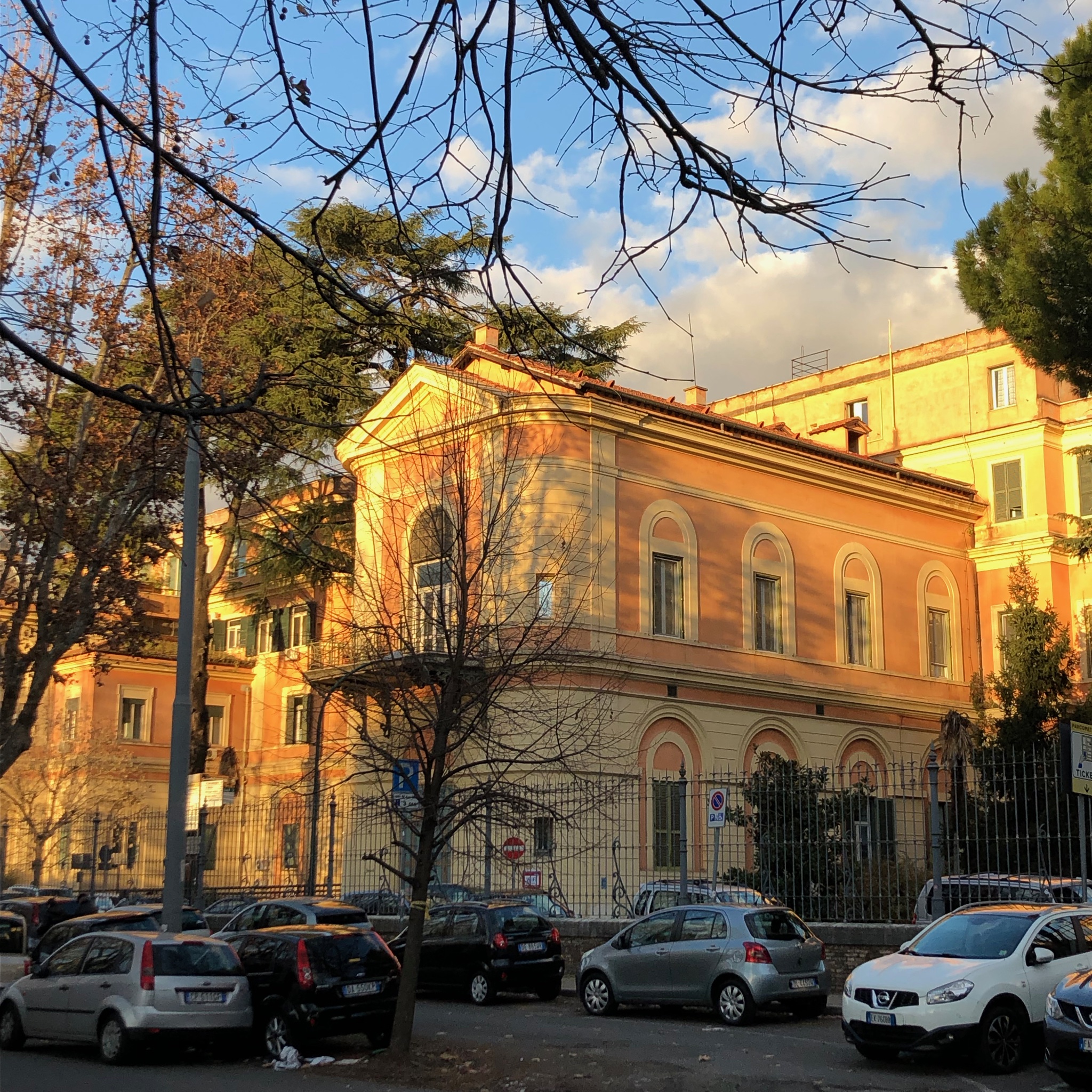
Malattie Infettive (Infectious Diseases) is in the south-eastern corner of the hospital. I’m lying in bed in a new side room, still unable to sit up unaided. Finding my veins has been a challenge for the nurses, but I’m cannulated and antibiotics are dripping away along with a medicinal compound, the colour of school lemon curd, in place of food. I no longer need a nasal cannula for oxygen. I don’t have a firm shake-hands grip on reality just yet, but I’m getting there.
Sundays are quiet in Malattie Infettive, with less bustle and fewer animated, Italian conversations echoing in the corridor for me to misinterpret. The Sunday before I’d only just arrived here, partly delirious, and in a room with a light-heavyweight crucifix on the wall where I hoped a clock might be. I had no watch, and the tinted acetate covering the window made it hard to interpret the Roman daylight. By the time my wife arrived at the start of visiting I was convinced, wrongly, that it was already Monday. I berated her, unfairly, for not coming to see me the ‘previous’ day.
And the Sunday before that, I was in the ICU, just about alive.
But now it’s the morning of Sunday 20 January and I may be wiggling my toes. This is something one of the doctors has encouraged me to do and I have decided to trust her absolutely. And right now, I’m not good for too much else. Any wiggling I might be doing is interrupted by the arrival of the medical director. I can’t remember whether he examines my feet with their black, necrotic heels and ‘foot fingers’. This is as much a social call as a clinical visit. In faltering but impressive English, he asks me how I’m doing.
Before he leaves, he tells me I am the luckiest sepsis patient he’s ever seen.
Some ball-park stuff about sepsis, or blood poisoning, as it is sometimes described. According to the UK Sepsis Trust, “Up to 80% of patients survive sepsis.” But should you develop septic shock, that figure changes to around 50%: the toss of a coin. And should you survive, there’s a risk of long-term complications or damage to vital organs, or you may need amputations to keep you alive. Because it often starts by looking like something else, sepsis is not always easy to spot.
In my case, towards the end of a family holiday in Rome, I noticed the beginnings of what I thought was ‘a bit of a cold’. This developed into a fever alternating with abnormal chill, became bringing up blood, became mottled skin, became being unable to move because too weak and in too much pain from a swollen left knee and right wrist. By the time I was admitted to Umberto I, sepsis and septic shock were presenting as double pneumonia and soon afterwards as cardiac arrest. After a few precarious days, a blood test revealed neisseria meningitidis bacteria as the principal cause of infection, and appropriate antibiotics turned things around. Because I was in an induced coma for six days, the critical time was much harder for my family than it was for me.
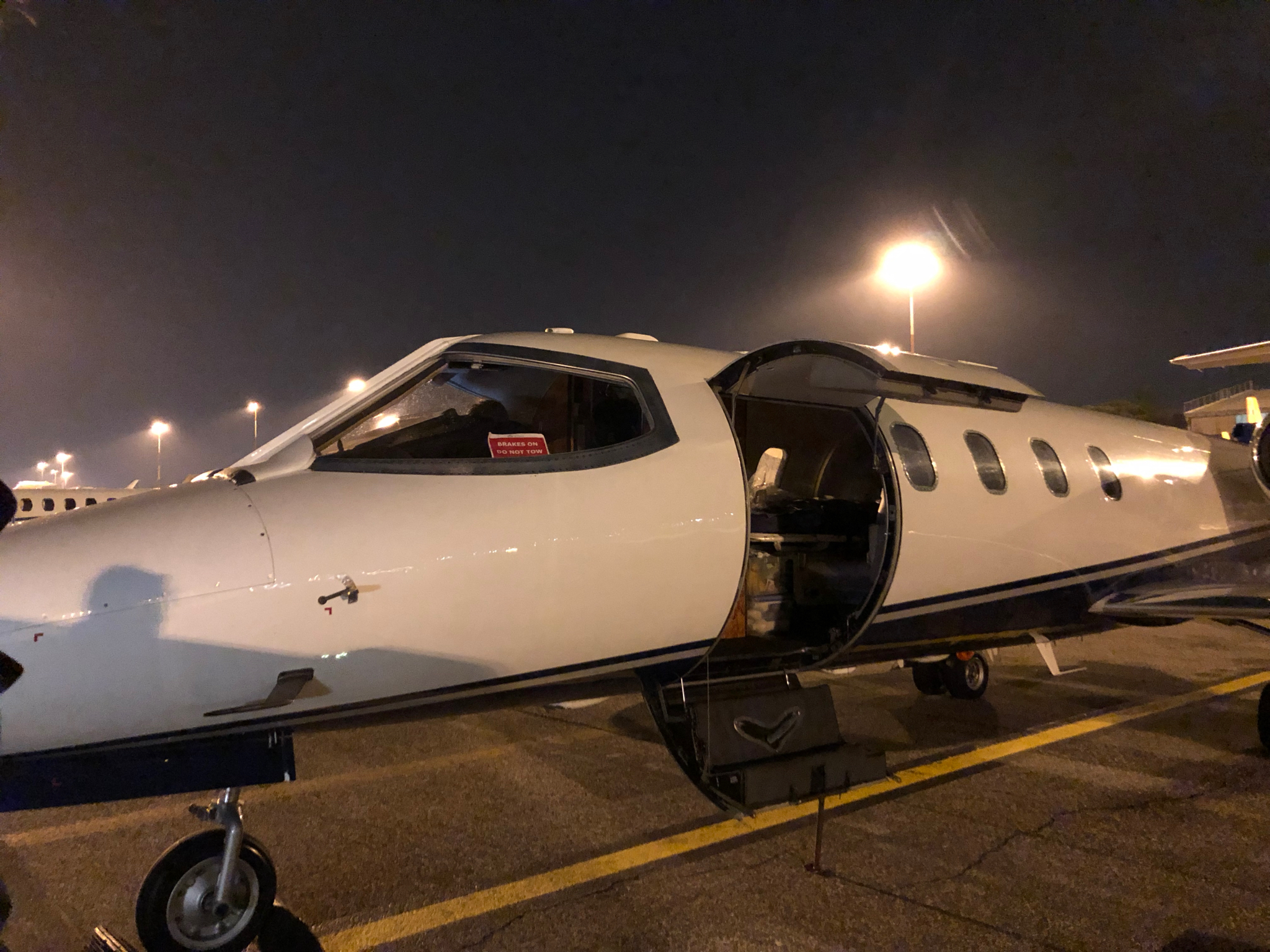
They say it takes at least a year to recover fully from sepsis. Six months on, I am still processing what happened. Perhaps because I was oblivious at the most dangerous time it has taken this long to accept how ill I was.
Six months on, there’s a part of me still lingering or even malingering in Umberto I. There are moments of existential fog, swings of mood, random tearfulness. All of this is consistent with what they call Post-Sepsis Syndrome. I am still disturbed, sometimes, by the vivid hallucinations I had in the ICU, and by the period of ‘parallel reality’ that followed for at least a week after I came out of the coma. (Interactions with my family were normal and accurate, but at the same time I firmly believed in a delusional, often paranoid soap-cum-psychodrama about the doctors and nurses, built upon conversations overheard in a language I do not speak!)
I will hate forever the rubbery smell of an oxygen mask.
But, at the time of writing, I am systemically well. I am working again, gently, with a new series of Annika Stranded and a set of stories from Zoe Gilbert’s Folk already under my belt. My mobility has been impaired, temporarily, by the damage to my feet. My toes will be shorter and uglier by the time the podiatrists have finished, but I will still have them, and this wasn’t a given at the beginning of the year. Psychotherapy, physiotherapy and a supportive GP are all playing their part in recovery.
What recovery will look like, I don’t yet know. I suspect it will be that point at which I am no longer thinking about recovery.
But the man at Umberto I was right: I am very lucky.
Why am I telling you this? Partly, I suppose, to increase awareness about a disease that kills a lot of people and damages many more. My life – and my family’s life – changed the moment I lost interest in Michelangelo’s ceiling and began to feel ill and stressed and anxious in the Sistine Chapel at the start of 2019. I don’t plan to turn this site into a ‘recovery journal’ but, just as my body is changing, so is my outlook. Now that my sepsis experience is out there, it should be easier to return – as I hope to do more often – to other topics.
And now seemed like a good moment to freshen up the look of my page. Same geezer, different hat. I hope it works.
 geezerinhat
Terrifying. Glad you are making a good recovery.
Thank you!