“ … I found a small alarm clock with square black numbers and a picture of a tiny butterfly in the middle of its round face, I took it.
“The hands didn’t move at first, but my mother said you just had to wind it; only when she did, I saw that it was broken, because the second hand ran backward, and if you stared at the clock long enough to notice, so did the minute hand.”
I’ve nicked this extract from ‘A Family Visit’, the first of three stories from Time by Olga Grushin, starting on Sunday evening on Radio 4. Because time, in the world of these stories, does indeed go backwards. Not in a Slaughterhouse Five or Time’s Arrow sort of way but as we experience it, in which the present moment is like a small clearing in a never-ending birch forest of memory. Characters turn back to retrace their steps or simply get lost in the trees. The past is relived, reassessed or, in one case, simply reinvented.
 ‘A Family Visit’ (TX 23 March) is a pain-filled, classic homecoming tale about the tensions between the ‘one who left’ and those that remained. The story is told from the viewpoint of a boy, half-American, visiting Russia when his mother returns to sort out her late father’s estate. He watches her face the recriminations of her siblings and an especially venal sister-in-law. It’s a challenge for the reader, a first person narrative by a young man not so much looking back at his younger self as re-inhabiting it, and there is a range of ages and accents to characterise. It took a while, before recording, to calibrate the accents of Americans, ‘Russian-Americans’ and Russians. But Joshua McGuire (you may have seen him as Isaac in The Hour) navigates the story with great sensitivity and skill.
 The late father or grandfather is still very much alive in ‘Father Time’ (TX 30 March). Professor Lebedev dozes off in a concert hall while listening to a Rachmaninov piano concerto, after which things begin to go wrong and get very, very strange. I don’t want to give too much of this dreamlike tale away, but suffice to say the Professor encounters some alarming characters, including a skeletal pianist and a man with a clock that goes backwards. David Warner narrates: you can find all of humanity and time itself in that wonderful, weathered voice.
![So what might be contained in Elena's bag? [Photo by Olga Grushin]](https://geezerinhat.com/wp-content/uploads/2014/03/russian-cup.jpg)
I first encountered Olga Grushin’s work randomly, in my local bookshop, when a book with a line illustration of Red Square on the cover called The Dream Life of Sukhanov shouted ‘Buy me.’ I’m so glad I did. A second novel The Concert Ticket (or The Line, in the US) came out in 2010, at about the same time as we were recording Olga’s first story for radio ‘The Homecoming’. Listening back, this sounds very much like a prototype for all three stories in Time. Two years ago, we were lucky enough to produce The Dream Of Sukhanov for Book At Bedtime. It’s one of the most rewarding novels I’ve worked on, and certainly the most difficult to abridge.
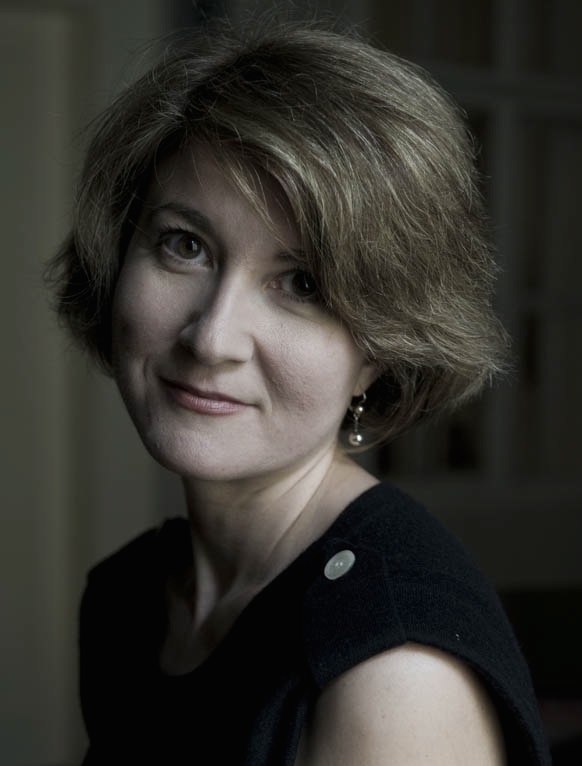
Olga moved to the United States in 1989, becoming the first Russian to enrol and complete an American college programme. Much was made of this at the time, and you can read Olga’s own take on it in an Observer piece called ‘Once Upon A Life’. But while you can take the girl out of Russia, you can’t take Russia out of the girl: only someone on diminutive-name terms with the greats of the Russian tradition could write like this.
These are special stories, I think, so I’m asking you to surrender fifteen minutes of your time for three Sundays in a row. Sure, they’re melancholy, and often sad, but wise and beautiful, too. And you may find, paradoxically, that they give you back more time than you gave up to listen to them.
 geezerinhat