As New Year resolutions go, it seemed simple enough. And – unlike doomed plans past to be smoke free, more efficient, less vain – one I thought I could keep. All I had to do was read a few books the way I used to: chosen on whim and without a radio agenda. I wouldn’t cast readers in my head. I’d enjoy twists of plot and sub-plot without wondering which ones to cut and I wouldn’t try to break the story into episodes. And never once ask the question Will This Work?
And so, books were gifted and books were bought. And early in 2012 I put them in a neat pile by the bed. You know the punchline already: they’re still untouched, ten months on.
I’d love to put hand to brow and sigh like a consumptive poet and plead overwork – but I can’t. Yes, I do get sent a lot of books for the day job (I do read these) not to mention short stories (most of which are commissioned and loved, so no complaints there either). Equally, I’m a) lazy b) correctly distracted by family life c) incorrectly distracted by Test cricket and the Champions’ League. But I do think that when it comes to ‘extra-curricular’ reading I’ve developed a mental block.
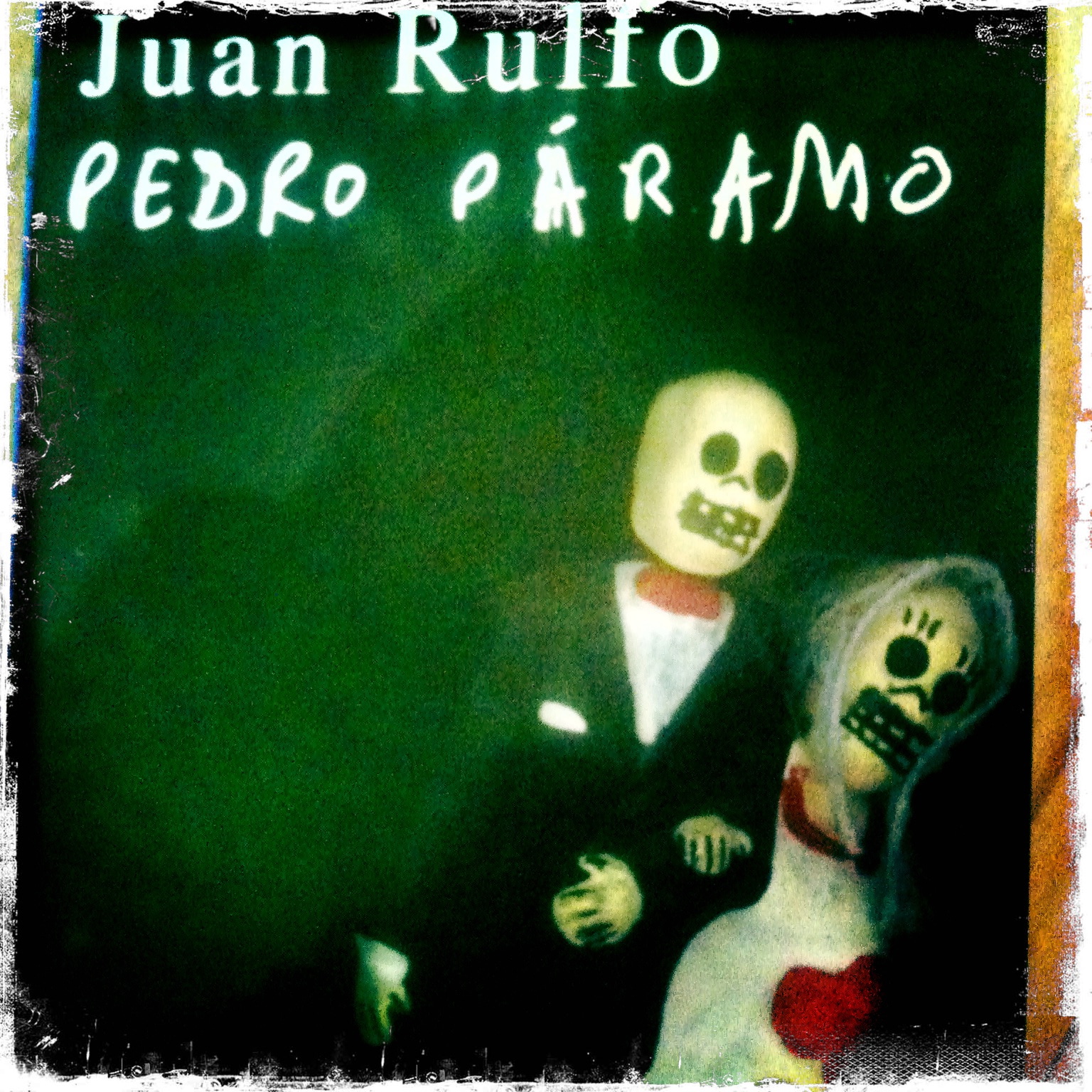 Still, like the first guys to take pickaxes to the Berlin Wall, I’ve made a few small chips in the concrete in recent weeks. The Silent History continues to engage and I’ve started to read Pedro Páramo. Granted, someone I’m working with put me on to it, and when finished it will be a useful point of reference between us. But Pedro Páramo probably won’t be on Book At Bedtime. And sadly, Juan Rulfo died in 1986, so I can’t commission some bespoke stories from him. So as I see it, this is ‘reading without agenda.’ For those who don’t know (and I didn’t) Rulfo was a major influence on the likes of Gabriel García Márquez and, while no one has been born with a pig’s tail yet, I can see why. More on this another time.
To be clear: I like what I do. It’s a privilege to read good books by good writers, often before publication, and call it work. But sometimes it would be nice to be Joe Reader again, too, and it would help keep my judgment fresh.
The Abridger Has Been Drinking?
The next abridgment beckons. So far I’ve been fortunate to work only on novels I love and have chosen myself. Because of this, ‘going native’ in the world of the book has been all too easy.
 Mostly this is harmless, perhaps no more than compiling an appropriate soundtrack to listen to while getting into the zone each day. It can be inspired by music alluded to in the book or by something that just feels right. The playlist for Olga Grushin‘s The Dream Life Of Sukhanov was a champagne and truffles affair of Russian opera and heart-rending piano music: great for the work, not always so good for my emotional well-being. Patti Smith provided the background for … Patti Smith (Just Kids), which because I played loud during screen-breaks tested the patience of my kids. No And Me (Delphine de Vigan) prompted listening to French pop, which prompted only derision from my kids.
But sometimes it goes beyond music. I was so engrossed in The Glass Room by Simon Mawer (music – solo piano by Janáček) that I cleaned (!) the big windows near my desk to enhance the sense of glass and light. But while I like our house, the Villa Tugendhat it ain’t, so no amount of imagination could turn the view of a Tooting backyard into a Moravian landscape. Even so, the characters became so vivid that their plight – rather than technical issues – began to keep me awake at night.
And then there was bullfighting. The most dangerous way to finish off a bull in the ring is the recibiendo, in which the matador stands still and encourages the bull to come and have a go if he thinks he’s hard enough, whereupon the unfortunate beast charges onto the point of the bullfighter’s sword. Quite often the bull is indeed hard enough, which is what makes this method so risky. Wena Poon evokes the choreography of the corrida beautifully in Alex y Robert, so much so that I tried to mime some of the matador’s best moves. I had just mastered what I thought was a pretty good recibiendo (complete with air-cape and air-sword) when my then12-year-old son walked in, said nothing and fixed me with a look of extreme pity.
These are a few examples. I’m not sure whether it’s good (shows empathy with the text), bad (lack of editorial detachment) or simply confirms the need for continued medication. But I get there in the end.
So this is the trade off. Less breadth, for now, but a few books each year that I experience more fully than I would if reading in a conventional way.
And thank you for reading – all thoughts on overcoming a ‘recreational reading’ block welcome. It’s time to put a playlist together for the next book. I’m not sure, but I think Tom Waits might be in there somewhere …
 geezerinhat
What a pleasure! More, more.