Today, I’ve been listening to Schumann. I don’t know much about him, but he turned to composing after he injured his hand in a self-made device intended to strengthen his fingers, and so destroyed his hopes of being a great performer. (Glenn Gould soaking his hands in boiling water seems quite sensible by comparison.) His wife Clara, meanwhile, was a great piano virtuoso of her time. The ‘1066 and all that’ line is that their marriage was one of musical minds as well as bodies and souls. But I’m guessing that like most married couples they must have fought sometimes. Given Robert’s backstory this leads me to wonder if some of his more difficult compositions were acts of passive-aggression: something along the lines of “OK Clara, get your fingers round THIS.’
Why Schumann? Lately, with anorak panache, I’ve been building up the music library on my laptop so that it’s comprehensive beyond essentials and desert island favourites. So I’ve been picking out and downloading CDs – many of which I’d forgotten I owned. I have quite a lot of classical CDs, many of them acquired at a time when a) I belonged to a music club, b) I was often too lazy either to cancel or return the recording of the month and c) I was quite often depressed. I’m not suggesting the one caused the other. Even if classical music only rarely broke through my self-made clouds, it did quite often shine like sunlight behind them. Looking back, I think there was a form of self-punishment at work: pop music was frivolous, and somewhere along the line I’d forfeited the right either to sing along or shake my thang – such as it is.
I’m not locked in the past, but it’s useful to look backwards sometimes to make sense not only of how things were but how they are. It’s why I think the study of history should be compulsory until 16 minimum. And it’s why – the pragmatic value of filling air time or column inches aside – the media like a good anniversary. Right now things are building towards a major ‘ten years on’ splurge about 9/11. And recently it’s been 20 years since the failed Moscow coup (remember Boris Yeltsin, sober and standing on top of a tank?) and the 50th anniversary of the building of the Berlin Wall.
1961 also marked the release of a long-forgotten board game called GO: The International Travel Game. What’s this got to do with anything? Bear with me.
When we were kids, our great-uncle used to send us a board game every Christmas, and I imagine this is how GO came into the house. If you click on the link above you’ll see this was very much a game of its time: when travel was glamorous, the boat train from Victoria took people to ‘the continent’, and the lucky flying few took airlines called BOAC or BEA and stepped onto the tarmac looking like Marilyn Monroe, Astrud Gilberto or the Beatles. I can’t remember the rules or object of GO or whether we ever played it to a conclusion: perhaps it was one of those games that someone says ‘let’s play’, takes a while to set up and grasp the rules and is soon afterwards abandoned. The point is, in a battleship grey area with an appropriate fault line caused by the fold in the board, there was a place called Berlin. I didn’t know what or where it was then but it sounded creepy. A lifetime obsession was born.
Later came the diet of war films, spy films, spy novels and history books. I was a Cold War kid: and Berlin was the front line. It still sounded creepy, a bit scary and totally compelling.
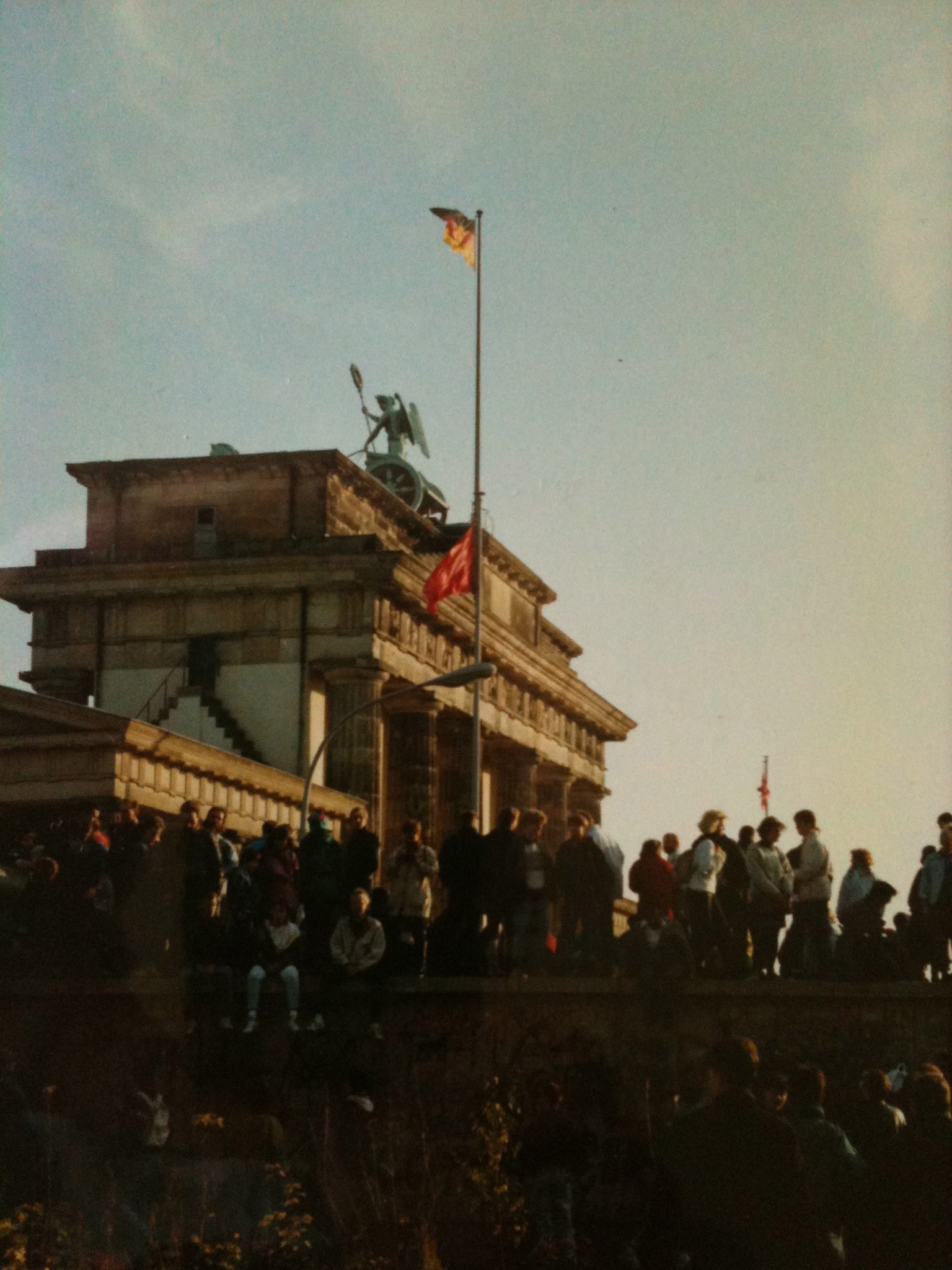
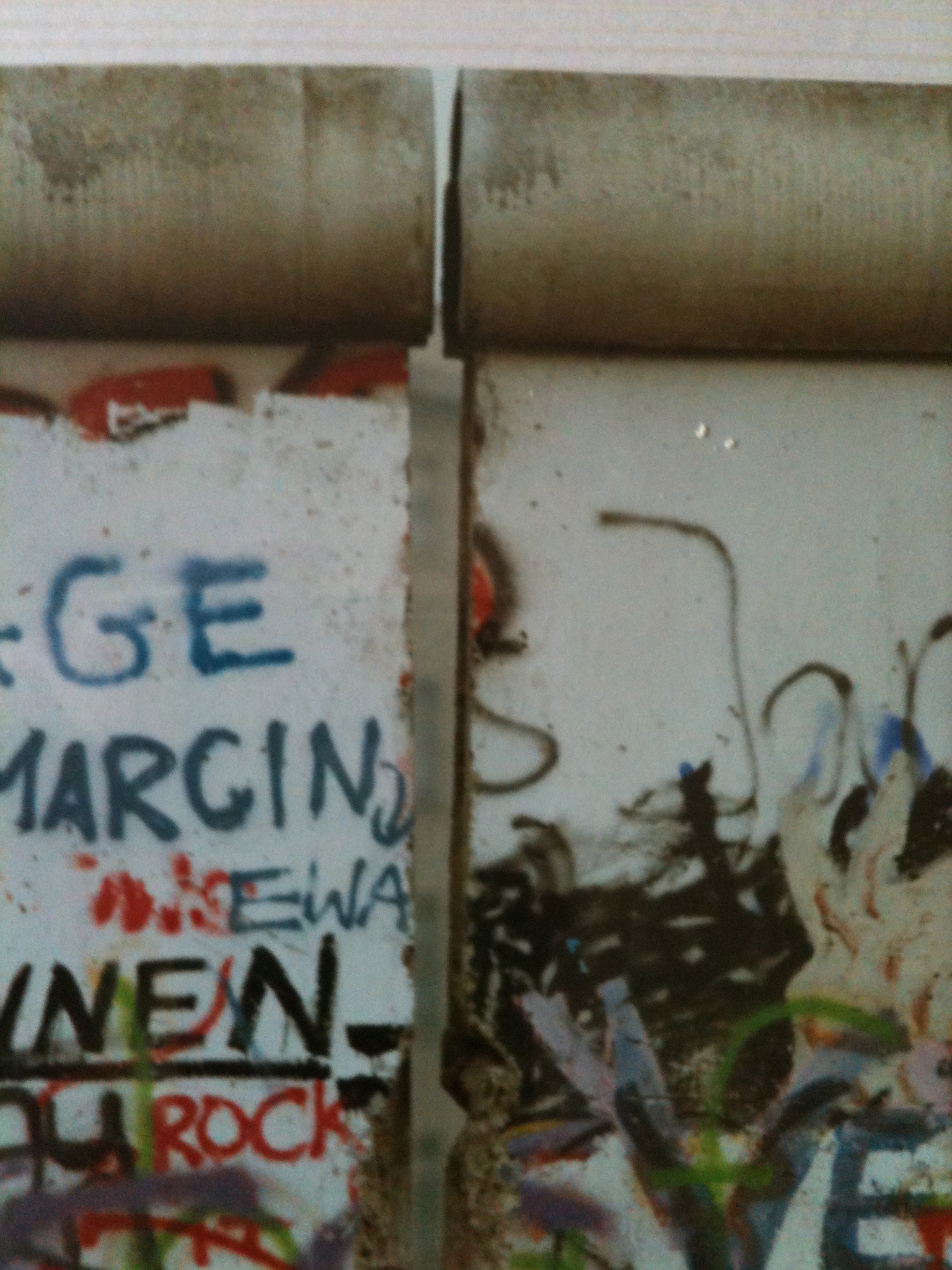
I wasn’t born when they built the Wall but I was in Berlin when they pulled it down. If I stop to describe that weird and wonderful time we’ll be here until spring (another time perhaps). But it was my first trip to the city (my wife, as she wasn’t then, had been before), the GDR opened the border while we were in mid-air, and more than once over the next few days the well-heeled citizens of West Berlin mistook us for ‘Ossies’.
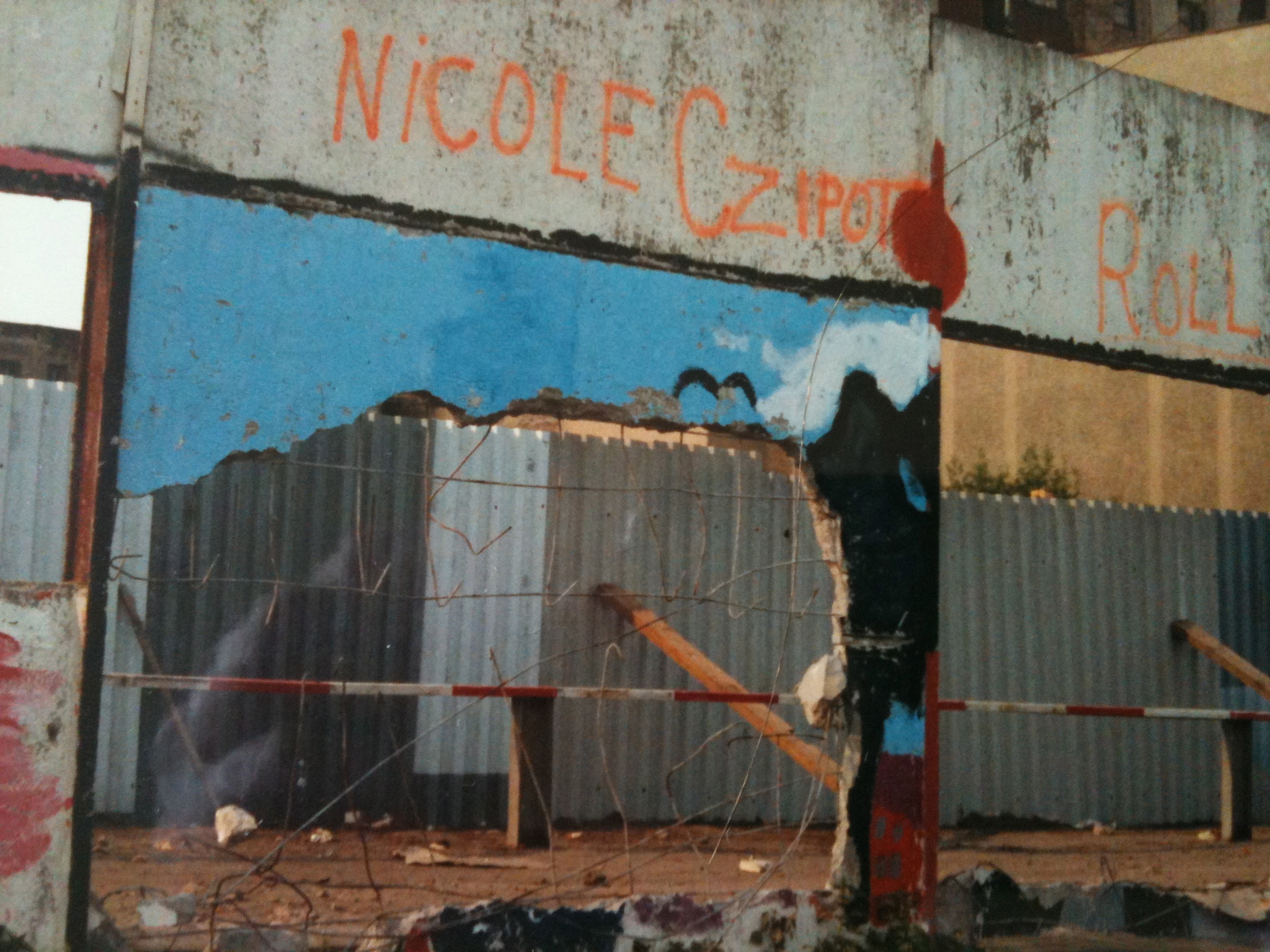
By our next visit, in 1996, the Wall had gone, although you could still trace its path as a gigantic construction site. Berlin was impersonating a boom town, like Chicago in the first wave of skyscraper-building. Huge cranes towered over Potsdamer Platz and work, under floodlights at night, continued round the clock.
Friends of ours relocated to Berlin in 2002, since when we’ve been back a number of times. The first time we went to see them was a magical, cold Christmas when we walked on frozen lakes. You could still work out which side of the Wall you were on by looking at the traffic crossings: the iconic Ampelmann (a geezer in a hat if ever there was one) in the East, more prosaic red and green men in the West. Now, the Ampelmann – himself 50 years old in October – helps Berliners cross the road in all parts of the city.
Now that history has closed over the Wall, physically at least, its original construction seems even more strange and cruel. The Story of Berlin, an interactive museum on the Kurfürstendamm, evokes the moment with large screens playing footage of those initial hours on continuous loop. It’s very moving: Berliners on both sides transfixed with a mixture of fear, grief and bewilderment as the barbed wire is unrolled across the middle of streets and tram routes. It’s like waking up one morning to discover the borough council’s building department has gone completely insane. I can’t find the same footage on youTube, but if you click on the link, this short US propaganda film gives you some idea of the spirit of that sad, historic time.
 geezerinhat
I do talk to him as well. Honest.